A Comprehensive Guide to the Techniques Made Use Of in Aluminum Foundry Workflow
Aluminum Foundry procedures utilize various casting techniques, each with distinct processes and applications. Understanding these methods is vital for enhancing production and accomplishing desired material residential properties. From sand spreading to die casting, the choices available can substantially influence effectiveness and expense. As technology advancements, so too do these strategies, motivating a better evaluation of their restrictions and benefits. The implications of these developments warrant more expedition.
Summary of Aluminum Casting Techniques
Aluminum spreading methods encompass a selection of techniques utilized to shape liquified Aluminum right into wanted forms. These strategies are critical in the production and engineering markets, using adaptability and performance. Significant strategies consist of die spreading, which utilizes high-pressure to infuse Aluminum into molds for precision components, and gravity casting, where liquified Aluminum is poured right into molds drunk of gravity, permitting bigger, less intricate shapes. Financial investment spreading, another approach, involves developing a wax pattern coated in ceramic, offering high dimensional precision for intricate styles. Additionally, long-term mold and mildew casting uses multiple-use molds, improving manufacturing effectiveness and lowering waste. Each method provides to particular applications, stabilizing factors such as price, manufacturing volume, and product properties. As markets evolve, innovations in these casting methods proceed to improve the high quality and performance of Aluminum components, placing them as necessary processes within modern-day production.
Sand Casting: Process and Applications
Sand spreading is a widely utilized approach in the Foundry sector, known for its simplicity and flexibility. Aluminum Foundry. This procedure involves developing a mold from a combination of sand and a bonding agent, usually clay. The mold is developed around a pattern, which is a replica of the desired final product. When the mold and mildew is ready, liquified Aluminum is put right into the cavity, enabling it to strengthen into the preferred shape
One of the key benefits of sand casting is its ability to produce intricate geometries and huge elements, making it appropriate for different applications, including automotive components, equipment elements, and attractive products. Furthermore, sand casting can fit different Aluminum alloys, improving its adaptability. The procedure is cost-effective for low to medium production runs, as it does not need costly tooling. Overall, sand spreading stays a basic method in Aluminum Foundry operations because of its effectiveness in conference diverse manufacturing requirements.
Pass Away Casting: Benefits and Limitations
While die spreading is often compared to sand spreading, it supplies distinct advantages and constraints that make it appropriate for specific applications in the Aluminum Foundry industry. One substantial advantage of die spreading is its ability to produce complex forms with high dimensional precision and superb surface coating. This procedure is particularly valuable for mass production, as it allows for faster cycle times and decreased labor prices. Additionally, die casting lessens material waste, boosting general efficiency.
However, pass away spreading likewise has limitations. The initial tooling prices are fairly high, making it much less viable for small production runs. The procedure is best fit for steels with low melting factors, which can limit material options. Pass away spreading is likewise limited pertaining to the optimum dimension of the components produced, as larger components might require different techniques. Stabilizing these aspects is essential for identifying the suitable application of die casting in the Aluminum Foundry market.
Investment Spreading: Accuracy and Detail
Financial investment casting is an extremely precise manufacturing procedure that permits complex styles and fine information in Aluminum elements. This technique uses significant advantages, including boosted dimensional accuracy and decreased machining needs. Its applications span numerous markets, highlighting its flexibility and performance in producing complex parts.
Refine Summary
The financial investment spreading procedure is renowned for its capability to generate high-precision elements and intricate forms. This approach begins with producing a wax pattern, which is after that coated with a ceramic shell. Once the covering hardens, the wax is dissolved, leaving an accurate cavity for the molten metal. The Aluminum is put right into this dental caries, catching the fine information of the original pattern. After cooling, the ceramic shell is escaped, revealing the cast component. Any kind of essential finishing work, such as machining or surface treatment, is executed to achieve the preferred specs. This process is particularly advantageous for intricate geometries that are challenging to accomplish through typical casting methods, guaranteeing both quality and precision in the end product.
Benefits of Accuracy
Precision in financial investment casting supplies substantial advantages, making it a preferred selection for producing complex components. This strategy allows the production of complex forms with tight resistances, minimizing the need for considerable machining and decreasing product waste. The ability to attain high dimensional accuracy converts to an exceptional fit and finish, boosting the overall top quality of this the final item. Furthermore, financial investment spreading enables the consolidation of great details, which is vital for elements calling for detailed styles. The procedure additionally supports the usage of numerous Aluminum alloys, additionally broadening its applicability. In general, the accuracy supplied by investment spreading not just improves the practical and aesthetic characteristics of elements yet also contributes to enhanced performance in production cycles.
Applications in Sector
While many producing procedures exist, financial investment spreading stands apart for its convenience across various markets, especially in fields requiring high precision and comprehensive elements. This spreading approach is extensively utilized in aerospace, automotive, and medical fields, where detailed layouts and limited resistances are crucial. Aerospace parts profit from financial investment spreading's ability to create intricate geometries that lower weight without giving up structural stability. The automobile industry employs this strategy to make engine parts that require resilience and precision. In the medical sector, financial investment spreading allows the production of medical tools and implants that need to meet stringent top quality requirements. Generally, investment spreading substantially improves product efficiency and dependability, making it a vital method in modern production applications.
Contrast of Casting Methods
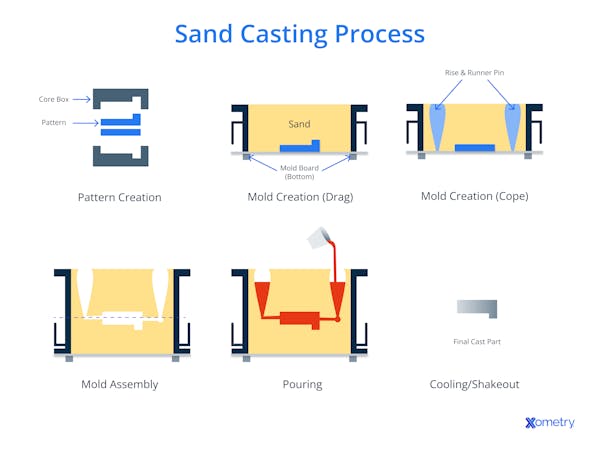 The comparison of casting approaches exposes distinctive advantages and applications across different techniques - Aluminum Foundry. Sand casting is frequently commemorated for its versatility and cost-effectiveness, while die casting is identified for its effectiveness and accuracy in creating high volumes. Financial investment casting, formerly gone over, showcases its unique capability to develop elaborate layouts, even more stressing the diverse abilities of each approach in Aluminum Foundry operations
Sand Casting Advantages
Sand spreading offers a number of benefits when contrasted to other casting techniques, making it a recommended choice in different production applications. Among the primary benefits is its affordable, as the materials needed, such as sand and metal, are economical and readily available. Furthermore, sand spreading allows for greater layout versatility, making it possible for the manufacturing of complex shapes and large elements that might be testing to attain with various other techniques. The process likewise fits a variety of steel alloys, consisting of Aluminum, enhancing its adaptability. Sand mold and mildews can be quickly repaired or changed for subsequent casts, making it reliable for both big and little production runs. Generally, these benefits add to sand casting's popularity in the Foundry industry.
Pass Away Spreading Techniques
Pass away spreading methods stand apart as a highly efficient approach for creating steel parts, specifically when compared to traditional spreading techniques like sand casting. This procedure involves forcing molten Aluminum right into a mold under high pressure, causing precise measurements and a smooth surface area finish. Unlike sand spreading, which needs comprehensive completing work, pass away casting reduces post-production processing, boosting general efficiency. Additionally, die spreading can accommodate intricate geometries, enabling elaborate layouts that would be testing to accomplish through other approaches. The speed of this contact form manufacturing is another benefit; die casting can create large amounts of components in a shorter duration. In general, the combination of design, performance, and accuracy adaptability makes die casting a favored selection in contemporary Aluminum Foundry procedures.
Investment Spreading Applications
Financial investment spreading, typically described as lost-wax spreading, offers unique benefits over various other casting approaches, particularly with respect to precision and surface area coating. This strategy permits the production of intricate shapes and fine details that are tough to accomplish with sand or pass away spreading. In addition, financial investment spreading generates parts with superior dimensional accuracy, reducing the need for comprehensive machining. Its adaptability makes it appropriate for different markets, consisting of aerospace, auto, and clinical gadgets, where high-grade parts are crucial. Contrasted to pass away spreading, which can be restricted by mold and mildew complexity, investment spreading succeeds in generating complicated geometries without jeopardizing structural integrity. The option of investment spreading comes to be progressively beneficial for applications requiring high efficiency and dependability.
Quality Assurance in Aluminum Foundry Procedures
Just how can Aluminum factories guarantee the finest in their products? Implementing strenuous high quality control measures is essential. Shops usually begin by developing clear specifications for the Aluminum alloys made use of, ensuring they fulfill market standards. Constant monitoring throughout the melting and pouring procedures helps recognize any inconsistencies from preferred chemical make-ups.
Moreover, visual assessments and non-destructive testing techniques, such as ultrasonic or X-ray evaluations, are generally employed to identify internal issues or disparities in spreadings. Additionally, statistical procedure control strategies track production data, enabling very early identification of possible issues.
Regular training and accreditation of employees in high quality guarantee techniques are essential for maintaining high requirements. Carrying out responses loopholes from consumers can aid shops refine their processes and improve product high quality. By adhering to these methods, Aluminum factories can constantly supply high-quality products that exceed or satisfy client assumptions.
Future Trends in Aluminum Casting Technology
Developments in Aluminum casting technology are poised to reshape the industry landscape, structure upon well-known quality assurance practices. Developments such as additive manufacturing and smart Foundry solutions are arising, making it possible for boosted style versatility and decreased waste. The integration of expert system and artificial intelligence in procedure tracking enables real-time adjustments, boosting performance and item quality.
Sustainability remains a vital emphasis, with an emphasis on reusing scrap Aluminum and minimizing energy consumption. Advanced alloy formulations are being created to enhance performance while minimizing ecological influence. The fostering of automated systems, including robotics for handling and pouring, guarantees to enhance office security and precision.
Additionally, digital doubles are getting traction, enabling digital simulations that help with much better decision-making and predictive upkeep. As these fads progress, they will likely create a much more efficient, sustainable, and highly advanced Aluminum spreading sector, setting brand-new criteria for high quality and efficiency.
Frequently Asked Concerns
What Safety and security Steps Should Be Absorbed Aluminum Foundry Operations?
In Aluminum Foundry operations, vital safety procedures include individual safety devices, correct ventilation, regular training, danger analyses, emergency preparedness, and adherence to methods to minimize risks related to liquified steel and heavy machinery.
Exactly How Is Recycled Aluminum Utilized in Foundry Processes?
Recycled Aluminum is generally utilized in Foundry processes to lower environmental influence and production costs. It goes through melting and refining, permitting manufacturers to produce high-quality items while preserving energy and lessening waste in the Aluminum lifecycle.
What Tools Is Essential for Aluminum Casting?
Necessary tools for Aluminum spreading consists of heaters for melting, molds for shaping, pouring ladles, cooling systems, and finishing tools. Each component plays a crucial role in making sure the effectiveness and high quality of the casting process.
Exactly How Do Environmental Regulations Impact Aluminum Foundries?
Environmental regulations significantly affect Aluminum foundries by imposing limits on exhausts and waste monitoring. Conformity needs investment in cleaner modern technologies, have a peek at this site which can boost functional costs but inevitably advertises sustainability and minimizes the environmental footprint of the sector.
What Are Usual Flaws in Aluminum Castings and Their Solutions?
Common defects in Aluminum spreadings include shrinkage, porosity, and surface area imperfections. Solutions involve enhancing thaw top quality, managing air conditioning rates, and employing appropriate mold layout, making sure better stability and performance of the final actors products.
 Major strategies include die spreading, which uses high-pressure to inject Aluminum into mold and mildews for accuracy components, and gravity casting, where molten Aluminum is put right into molds under the influence of gravity, permitting for bigger, less complicated forms. While die spreading is frequently compared to sand spreading, it supplies distinct advantages and restrictions that make it ideal for specific applications in the Aluminum Foundry market. Sand spreading is often celebrated for its versatility and cost-effectiveness, while die spreading is identified for its performance and accuracy in producing high volumes. Pass away spreading strategies stand out as a highly efficient technique for creating metal parts, specifically when contrasted to typical spreading methods like sand casting. Contrasted to pass away spreading, which can be restricted by mold and mildew intricacy, investment casting excels in creating complicated geometries without jeopardizing structural integrity.